


"Learn together to work together"
Simulation-based education is available to all undergraduate medical students attending placement at the Dudley Group.
The simulation centre opened in 2014 and is the base for medical simulation within the Trust. Training is delivered by a team of dedicated facilitators with a comprehensive level of clinical and simulation training experience. Our Simulation Lead holds a Masters in Medical and Healthcare Simulation, whilst the Clinical Lead for Simulation has delivered and coordinated simulation faculty development programmes.
Our Simulation Team
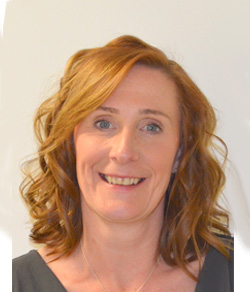

Laura Jones
Simulation Lead
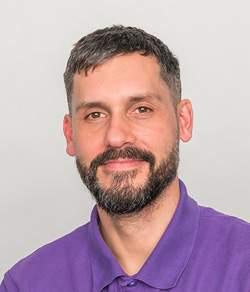
Barry Joseph
Senior Simulation Facilitator

Charlotte Gibson
Simulation Technician
For further information please email the simulation team using the button below.;
For Simulation Centre bookings, complete the enquiry form below;
Telephone: 01384 456111 Ext 3478
Follow us on X
Our Students
Select the tab buttons below to view further information about each student year group.
Year 3 Students
Third year medical students are given the opportunity to take part in an introduction to simulation and the ABCDE assessment. This session gives them a basic introduction to the manikin and the simulation environment and the opportunity to practice basic clinical skills.
Comments from third year students regarding their session include:
“Good use of the Sim Man”
“Very interactive case”
“I learnt a lot in the lesson”
“Really well structured and explained”
Year Four Students
Fourth year students undertake simulation in a number of specialist areas including respiratory, cardiac, diabetes and endocrine medicine. These sessions incorporate the assessment and management of patients who present with a range of conditions. As part of the multi-professional learning (MPL) cardiology day the 4th year medical students also take part in a multi-professional simulation scenario. They are expected to work with a range of other professional under graduate students to assess and manage a patient who presents with a cardiac problem.
Comments from fourth year students about what they liked about their session:
“Feel more confident on how to deal with a patient with chest pain and about escalating to appropriate people”
“The debriefing afterwards help broaden my knowledge”
Year Five Students
Fifth year students take part in a robust acutely ill patient (AIP) programme, which incorporates face-to-face teaching, study guides and high-fidelity simulation-based training.
The simulation scenario that accompanies each of the AIP presentations is facilitated and debriefed with expert facilitators for each clinical topic. The students receive repeated exposure to assessing and managing the acutely unwell patient throughout their AIP programme in preparation for their foundation year jobs. The concepts of human factors and non-technical skills and their relevance to medical practice are also incorporated into the simulation teaching.
Feedback from fifth year students regarding what they liked about the session:
“I found it useful to learn about subarachnoid haemorrhage management”
“Good to see the importance of following a history and examination structure”
“Really useful to learn how to manage a delirious patient”
“Learnt about practicalities of working with an acutely ill patients”

The Clinical Education team at DGFT is committed to embracing new challenges and demands, whilst providing high quality evidence-based education and training. We strive to ensure that tomorrow’s clinicians are highly skilled and competent providers of care, who embrace the organisations’ vision to be a highly regarded healthcare provider, driven by the philosophy that people matter.
"Self Care
To ensure our patients consistently receive safe and effective healthcare, our team facilitates and provides a broad range of clinical courses for:
- Medical and Physician Associate Students, including international students
- Non-medical healthcare professionals
- Medical professionals
- External healthcare professionals
Training is delivered within a simulated environment with a focus on promoting best practice. Our Clinical Education Team continues to support staff and students during their skills consolidation. Our approach to clinical education allows us to identify individuals who may benefit from additional support and training, to whom we can offer bespoke one-to-one training sessions, if required.
Furthermore, the Clinical Education team has several other roles and responsibilities, such as:
Training all of the Trust’s key Face Fit testers
Training Clinical Key Trainers, such as Practice Development Practitioners, in multiple clinical skills
- Writing, reviewing and updating several of the Trust’s Clinical Guidelines, Policies and Standard Operating procedures
- Attend various strategic Trust meetings
- Working closely with the Undergraduate and Postgraduate departments to facilitate and act as examiners in Undergraduate and Postgraduate exams, such as OSCEs and PACES.
- Participating in the Vaccination Hub to support medical students.
- Working closely with the Digital Media Team to create, review and update digital content (e.g. Tomorrow’s Clinicians videos).
- Facilitate the Medical Work Experience Programme.
- Auditing and supporting several Trust-wide projects.
For further information please email the ClinicalEducation team using the link below.;
Telephone: 01384 456111 Ext 1414
Our Clinical Education Team
The Clinical Education Office and Clinical Skills lab are based in the Clinical Education Centre (CEC), 1st floor, South Block, Russells Hall Hospital.
You may also see us across several clinical areas, supporting our students and colleagues. Feel free to approach us, if you have any queries.
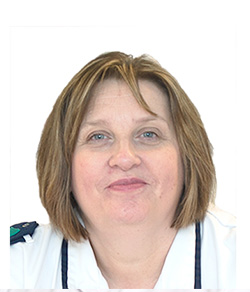
Margaret Cooksey
Clinical Education Manager
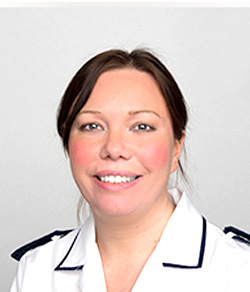
Sarah Fullwood
Inter-professional Senior Educator
Rachel Jordison
Senior Clinical Educator
Helena Vasconcelos
Senior Clinical Educator
Karen Cottrell
Clinical Educator
Victoria Perry
Clinical Educator
Lynn Badger
Clinical Educator
Robert Louis
Clinical Educator
Nila Patel
Clinical Educator

Lisa Perkins
Clinical Education Coordinator
Simon Nicklin
Clinical Educator
IPE
The new IPE study days allow more opportunity for students from multi-professional backgrounds to attend. This ensures that there is a greater mix of multi-professionals for the medical students to learn alongside. This will enhance balanced decision making as the students are exposed to a wider range of different values, perspectives, knowledge and skills.
The development and regular review of these study days is undertaken to ensure that they encompass the Competency Framework for Interprofessional Education as set out by the University of Birmingham Medical School.
IPE Workshops include:
- Bereavement (5th Year)
- Breaking Bad News (4th Year)
- End of Life (4th Year)
- Safe Discharge Planning (5th Year)
- Safe Prescribing & Drug Administration (5th Year)