Students at RGUC
We have provided clinical placements to third, fourth and fifth year medical students from the University of Birmingham since 2005. Birmingham medical students on placement with us will be undertaking the MBChB in Medicine and Surgery.
Our students will find a wealth of opportunities at the Teaching Academy to support their growth as medical professionals. The academy offers interactive teaching sessions, simulation-based training, and a variety of online resources, all designed to help students build the skills, knowledge, and confidence they need throughout their studies.
Students will also have the chance to learn alongside a wide range of healthcare professionals who are always happy to share their expertise and guidance. Whether it’s asking questions, participating in workshops, or getting hands-on experience, there is plenty for students to engage with and explore.
University of Birmingham Medical Students
We have provided clinical placements to third, fourth and fifth year medical students from the University of Birmingham since 2005. Birmingham medical students on placement with us will be undertaking the MBChB in Medicine and Surgery.

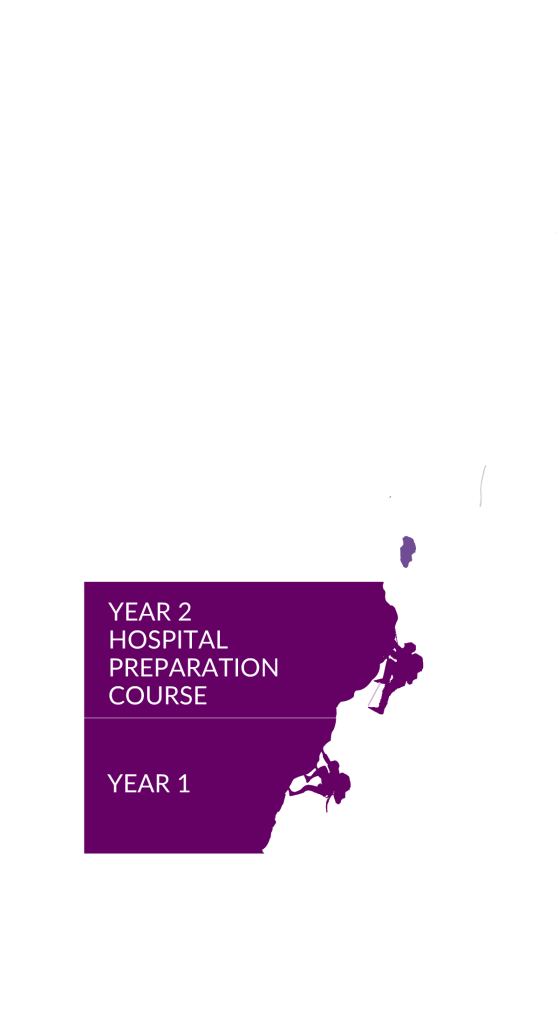
First and Second Year Hospital Preparation Course
Every summer, we offer second year medical students the opportunity to spend two days familiarising themselves with Russells Hall Hospital and its surroundings, prior to commencing their third year placement.
Students are introduced to their allocated third year firms, which provides an opportunity to meet other members of the same group. We also provide access to the RGUC online learning platform, allowing students to view their teaching timetables and watch the eLearning resources.
We prepare a comprehensive programme aimed at helping students to get a feel of real hospital working life. This preparatory experience is designed to orientate students to the undergraduate department, as well as increasing their exposure to the clinical environment.
The course includes a brief introduction to the undergraduate team and information of what it is like to work in a hospital environment.
There are supervised tours of the hospital site and various departments. Students are encouraged to shadow junior doctors on the wards, allowing them their first opportunity to interact with patients.
Students also undertake supervised practical sessions on airway management, simulation and clinical equipment. For example, laparoscopic simulators, blood pressure machines,
ophthalmoscopes, auroscopes, tendon hammers and tuning forks.
We end the course with a fun quiz, which has proven to be a great way for students to consolidate what they have learned and reflect on their experience over the two days.
Feedback for the preparation course has been rated as 4 or 5, (5 being the highest score) and the comments on the whole have been good and very positive.
Third Year Students
The third year programme is a broad based training programme for students in general medicine and surgical specialities, where they have the opportunity to learn history taking and diagnostic skills.
Select the buttons below to learn more about each semester
Semester One
The first four weeks of semester one provides students with an introductory period, during which they are on placement from Monday to Friday. During this time, the students’ mandatory basic teaching sessions are prioritised. These range from clinical skills and resuscitation to introductory lectures.
From week five, students are on placement Monday to Thursday, and their electronic timetables feature speciality teaching sessions and weekly bedside teaching from firm tutors and teachers.
In addition to this, the medical school’s Interactive Studies Unit visits the hospital and facilitates small group communication sessions over a two day period. These sessions assess and improve students’ communication skills in varying clinical situations whilst on placement.
Semester Two
In semester two, mandatory teaching is delivered adjacent to other scheduled teaching sessions, to minimise the impact on students’ progress at the beginning of their placement.
Students are individually timetabled to attend an ophthalmology clinic where they are given the opportunity to complete specific ophthalmic clinical skills. January is a very busy month for students, as not only are they required to complete their mandatory teaching, but they are also required to undertake their long case assessments with tutors and teachers within their first few weeks of placement.
Examples of timetabled activities are:
- Case Presentations – All students from one firm every week present a case. The winners go forward to the Ron Grimley Awards.
- ‘Nurse for the Day’ – Each student will complete a full day nursing shift on the ward which exposes them to Interprofessional education.
- ‘Radiology Experience’ – Small groups of students visit the X-ray department to gain additional experience in angiography, vascular ultrasound and nuclear medicine.